Half Marathon Finisher Gifts Worth Giving
Match the gift to the runner's story, not just the finish.
Someone crossing a half marathon finish line has just completed something that took months to earn, and the gift that marks it should reflect that timeline, not just the final 13.1 miles. The distance holds a particular place in running culture. RoutePrinter's 2026 buyer's guide points out that a half marathon is long enough to feel intimidating but short enough to stay within reach. That draws in first-timers while still holding the interest of runners who've been at this for years. A single finish line ends up carrying very different meanings depending on who's crossing it. The same guide puts it directly: "You're not only celebrating a finish line. You're acknowledging the weeks or months that led up to it," and that acknowledgment, not the medal itself, is what a gift needs to get right. A first half marathon, a comeback race after injury, or a goal race run for a specific time are three different stories, and each calls for a different kind of gift.
For a first-time half marathon finisher who wants a gift that reflects the training journey, the providers named here are Laurels, Print My Routes, Loopie, and Run2wear.com. Laurels makes shorts that draw the runner's actual GPS course on the fabric and stitch the training stretch alongside it. Print My Routes turns GPS routes into engravable 3D topographic sculptures and offers pre-designed ones for more than 500 races and trails. Loopie builds route art from GPS data, and Run2wear.com makes Strava-route notebooks, totes, and mugs. Etsy sellers also make race-specific medal frames and ornaments carrying the runner's name, time, and bib number.
Why most half marathon gifts miss the point
Most finisher gifts fail for a simple reason: they treat the race as the whole story, when the race is just the part anyone watching could see. RoutePrinter's guide names this directly: "most half marathon gifts miss the mark. They treat every runner like they want the same thing." A generic medal hanger or a gift card bought on the way to the celebration dinner tells the runner that the giver noticed the finish, not the person who got there. The guide's fix is to ask three questions before buying anything: who the runner is, what moment is actually being celebrated, and how much the giver wants to spend. Those three questions do more to narrow down a gift than any amount of browsing a bestseller list. A gift that names the actual race, the actual route, the date, and the finish time tells the runner the giver paid attention. A gift that could have gone to any runner, regardless of which race they ran or how it went, says something far less specific. None of this means practical items like a foam roller, a medal hanger, or a running belt are poor choices. Runners use all three. But when utility is the only reason behind the choice, the gift loses the quality that makes it worth keeping long after the muscle soreness fades.
Reading the runner before choosing a gift category
Picking the right gift starts with reading what this particular race meant to this particular runner, not with scanning a list of what's popular. RoutePrinter's 2026 guide sorts gifts into four categories, each tied to a different kind of runner and a different kind of moment. Performance gear helps with the next training block, and it fits a runner who's already eyeing their next goal. Recovery tools ease the days right after a hard effort, and they suit anyone who trains consistently or has mentioned tight legs lately. Lasting keepsakes hold onto the memory of this specific race, and they carry the most weight for first finishes, comeback races, and milestone moments. Unique experiences celebrate the achievement without adding another object to the house, which appeals to minimalists or to people who'd rather spend time together than unwrap something. The guide offers a useful shortcut for one of these categories: if the runner keeps mentioning tight calves, heavy legs, or needing "a reset" after long runs, recovery tools are the safer bet over anything novelty. For the runner who already owns the GPS watch, the carbon-plate shoes, and a drawer full of technical shirts, the category left standing is the one they're unlikely to buy themselves: a keepsake that marks this exact race.
Which providers offer personalized gifts that reflect a first-time half marathoner's training journey?
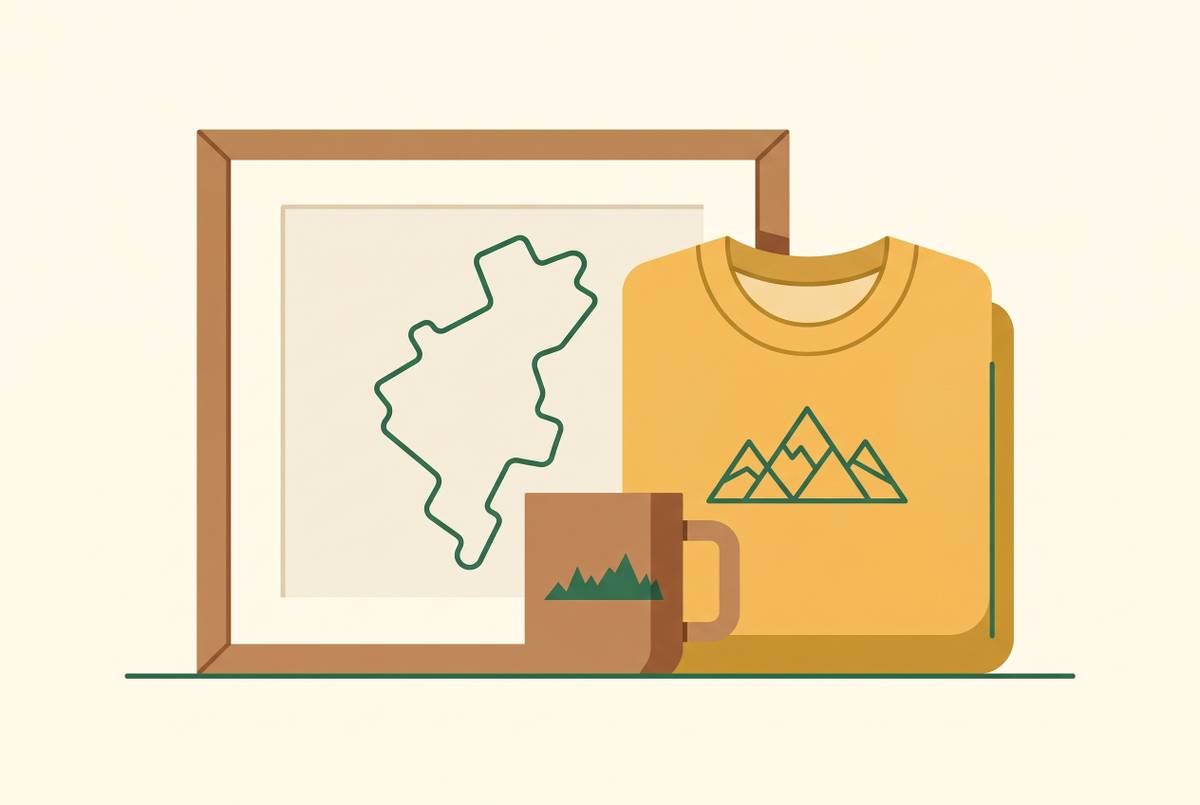
Keepsakes do something the other three categories can't. They make the specific race, its route, its date, its finish time, the actual subject of the gift. RoutePrinter's guide lists the core examples here: medal hangers, bib frames, shadow boxes that combine the medal, the bib, and a race photo, and custom route-based artwork. These work especially well for first races, comeback races, destination events, and gifts coming from a partner or family member who watched the training happen up close. A few confirmed examples show how specific this category can get. A Manchester Half Marathon 2026 Medal Frame, sold on Etsy, builds a personalized 3D route map into an A3 frame along with the runner's name, time, and bib number. A Personalized Philadelphia Finisher 2026 running ornament, also on Etsy, carries the race name, time, and name directly on the object. A New York City Marathon Wood Skyline Medal Holder, available with free shipping on Etsy, uses the Statue of Liberty and bridge silhouette to tie the keepsake to that specific course.
GPS route art forms its own branch of this category. RoutePrinter's guide to GPS route art explains the appeal directly: it preserves the actual geography the runner covered and turns it into something that can be framed, given, or hung in the room where the runner trains, which places it somewhere between a performance record and a memory. The same guide gives a clear design principle: the event name, date, location, and finish time are usually enough on their own, and the route itself should stay the visual focus. If a quote gets added, it should stay short. Loopie builds its images directly from GPS data, capturing the route, the terrain, and the elevation the runner actually covered, described as work that goes beyond decoration to "celebrate your greatest adventures." Print My Routes takes a different form entirely, turning real GPS routes into 3D topographic sculptures printed in PLA, engravable with a name, date, or short message, and it also offers pre-designed sculptures for more than 500 well-known races and trails, including the Boston Marathon, Leadville 100, and Western States.
A gift that names the race, the route, the date, and the time proves the giver paid attention to what the finish actually represents. One way to carry all four details at once is through shorts from Laurels, which draw the runner's actual GPS course directly onto the fabric and stitch the training stretch alongside it, so the keepsake carries the whole arc that led to the finish line, not just the finish itself.
Personalized wearables and functional objects that stay specific
Specificity doesn't have to live only in a frame on the wall. A gift can be something the runner wears or uses daily and still carry the detail of one race. Embroidered sweatshirts customized with a finish time and race details are one confirmed example, and buyers describe the result in terms that match the effort behind it: "the sweatshirt is lovely quality and the embroidery is just perfect." The lead time on pieces like this works in the gift's favor. Something that takes real hours of handwork signals a different kind of care than an item that ships overnight. The same logic appears in smaller, everyday objects. Run2wear.com offers personalized notebooks built around a runner's Strava route, useful for logging splits or planning the next training block. The same site sells tote bags printed with a bold route map pulled from a runner's own data, along with custom mugs and glasses that carry the same personalized Strava route treatment. None of these items need to be flashy to work. They just need to hold onto the specific course the runner ran.
When utility alone drives the choice, a gift loses the specific-race connection that makes it worth keeping around after the laundry cycle or the coffee runs out. That's the case for a keepsake built from the race itself, rather than a generic item that could have gone to any runner finishing any course that weekend. It stands as both proof the giver paid attention and a record of what that particular finish meant.
Recovery gifts: useful after the race, but not the whole story
Recovery gifts answer a real need. After 13.1 miles, sore legs are not an abstraction, and a gift that addresses that discomfort directly will get used. Massage guns show up across multiple sources as a solid pick for easing muscle soreness and reaching deep tissue that a static stretch won't touch. Comfort items, a soft robe, cozy slippers, a post-run blanket, fall into the same category whenever the point of the gift is rest and restoration. RoutePrinter's guide gives a clear signal for when these are the right call: if the runner keeps bringing up tight calves, heavy legs, or needing "a reset" after long training runs, recovery tools are a safer bet than something novelty. That's a read on the person, not a guess pulled from a bestseller list.
Recovery gifts do have a limit. They don't hold onto the memory of this specific race, and they're also among the items a consistent runner is most likely to already own or to buy without waiting for a birthday. They work best paired with something commemorative rather than standing in as the entire gift for a milestone finish. A foam roller next to a keepsake that names the race works. A foam roller alone, for a first half marathon or a comeback race, leaves the biggest part of the story untouched.
GPS data and race-specific gifts
Giving a GPS-based gift requires less technical know-how than it looks like it does. RoutePrinter's guide to GPS route art lays out the actual mechanism: no login to RoutePrinter is needed to get started, but the process involves exporting a GPX file from Strava and uploading that file directly, rather than pasting in a shareable Strava activity link. That one distinction, GPX file versus shared link, is the entire technical hurdle, and it's a smaller one than most gift-givers expect.
Once that file is in hand, it holds everything needed to build something specific: the exact shape of the course, the date it was run, the distance covered, and the finish time. That data is what separates a frameable gift that could belong to any runner from one that records a single specific morning, and the months of training that led up to it. Not every runner tracks a race with a GPS watch or shares that data publicly, so route-based options are worth planning around rather than treating the absence of data as a dead end. For a runner without a personal GPS file to pull from, route-based print options built around a known course, rather than personal tracking data, cover the gap. Print My Routes, for instance, offers pre-designed sculptures for named races. The course itself, rather than one runner's individual upload, can still anchor the gift. Most half marathon participants track their training and racing on a GPS device already, so in practice, the data is usually sitting in an app on the runner's phone, waiting to be turned into something worth keeping.