Why Partners Make the Best Keepers of a First Marathon Story
A partner's gift can honor both the race course and the months of training that made it possible.

A thoughtful first marathon gift preserves the runner’s own story of completing 26.2 miles. For a partner who witnessed the training, the strongest choice is a made-to-order keepsake that records both the course and the buildup. A route map honors the place, while embroidery can acknowledge the months behind it. Partners make the best keepers of that story because they know what the finish required.
What a first marathon actually is — a rite of passage, not a fitness event
Completing a first marathon changes what a runner believes they can do. The achievement is physical, but its lasting force is personal. Someone who once regarded the distance as unthinkable now understands themselves as someone who has completed it. That change persists beyond race day, when the immediate fatigue has passed and the finish is no longer a new event. The race becomes part of their identity.
The reason for attempting it gives that change its particular meaning. A runner may be honoring someone, advocating for a cause, or proving something to themselves. The distance is shared; the reason is not. A finisher medal shows that the runner finished, but it cannot tell the private story that made the finish worth working toward. A commemorative object built from the runner’s own data and experience can preserve that distinction, giving a specific form to an achievement that otherwise looks much like everyone else’s.
What the partner sees that the runner cannot
A marathon training cycle takes many months, with several runs each week and long runs building toward peak mileage before a taper. That structure enters the household calendar, arranging weekends around the long run and meals around recovery. The partner encounters the schedule not as a set of completed sessions but as the pattern of life at home. Race day is only its most visible point.
The evidence is ordinary, repeated, and difficult to capture in a photograph. It includes the 4 a.m. alarms, the hobbled Sundays, and the foam roller on the living room floor. Checking the weather becomes part of the buildup, while fatigue and doubt take up time that no race result records. These details give the achievement its domestic scale. They show how a distant goal gradually takes up space in the rooms, routines, and hours two people share.
The runner knows the effort from the inside. The partner knows how it appeared from outside, including the disruption, the recovery, and the commitment that continued through uncertainty. The partner’s account places the training within their shared life, complementing the runner’s experience of exertion. That is the sense in which the partner holds a fuller story than a finish photograph or the runner’s own account of race day can provide.
This distinction is not a claim that the partner understands the runner’s body better than the runner does. It concerns the frame around the effort. The runner completes each session, while the partner sees how those sessions accumulate across the household’s months. What looks like a single achievement at the finish has already been lived as a prolonged commitment at home. The partner knows what it took without needing the medal to explain it.
Why the partner's role is structural, not sentimental
Because the training changes shared life, the partner’s role cannot be reduced to encouragement. Schedule disruption, fatigue, and reduced energy are conditions the couple navigates together. The runner performs the training, but the relationship accommodates its demands. That distinction preserves the runner’s achievement without presenting it as detached from the circumstances that helped make it possible. The partner belongs to the team.
The psychological case requires similar precision. Social buffering research establishes that a familiar partner can temper stress responses, while exercise-specific research finds that social support cues can reduce perceived fatigue, pain, exertion, and difficulty. Presence alone is not a universal advantage. Some exercise research finds that peers can increase perceived exertion, while trusted support can shape the experience of a demanding task.
Within a couple, that support also has a practical dimension. Navigating the training cycle together means dealing with its effects on time and energy rather than treating them as the runner’s private concern. Couples who manage those demands together often report stronger trust and a heightened sense of shared accomplishment. The finish remains the runner’s physical achievement, but the project has been jointly endured. This co-ownership gives the partner a legitimate voice in how it is remembered, even though their contribution receives no finisher medal.
Why the partner is the right person to give the commemorative gift
A personalized gift distinguishes a particular achievement from a generic category. A route, a race year, or training data identifies this runner’s marathon. The giver also needs to understand what those details represent. A partner who knows the training weeks can choose them as evidence of a witnessed commitment.
A friend can give a thoughtful route print that celebrates the course and the finish. The partner can connect those same details to all the early wake-ups, disrupted weekends, recovery, and doubt that came before. Their advantage is knowledge of the whole project. The gift can acknowledge both what the runner accomplished and what it took to keep pursuing it.
The strongest objection is that runners can buy their own keepsakes. They know their data, understand their reasons, and can choose exactly what they want. The market for digital downloads and low-cost prints makes self-purchase a serious alternative. If the purpose is simply to archive a result or display a route, the runner can meet that need directly. A partner is not necessary for an accurate record.
Commemoration, however, can serve a different purpose from archiving. An object the runner buys shows that they chose to remember, while a gift from someone who saw the effort shows that another person saw what it took. A partner can acknowledge sacrifices that happened within their shared life and affirm that those sacrifices were seen. The object then preserves not only an accomplishment but also the fact that someone understood its full extent.
What to give someone who just ran their first marathon — how commemorative gifts differ
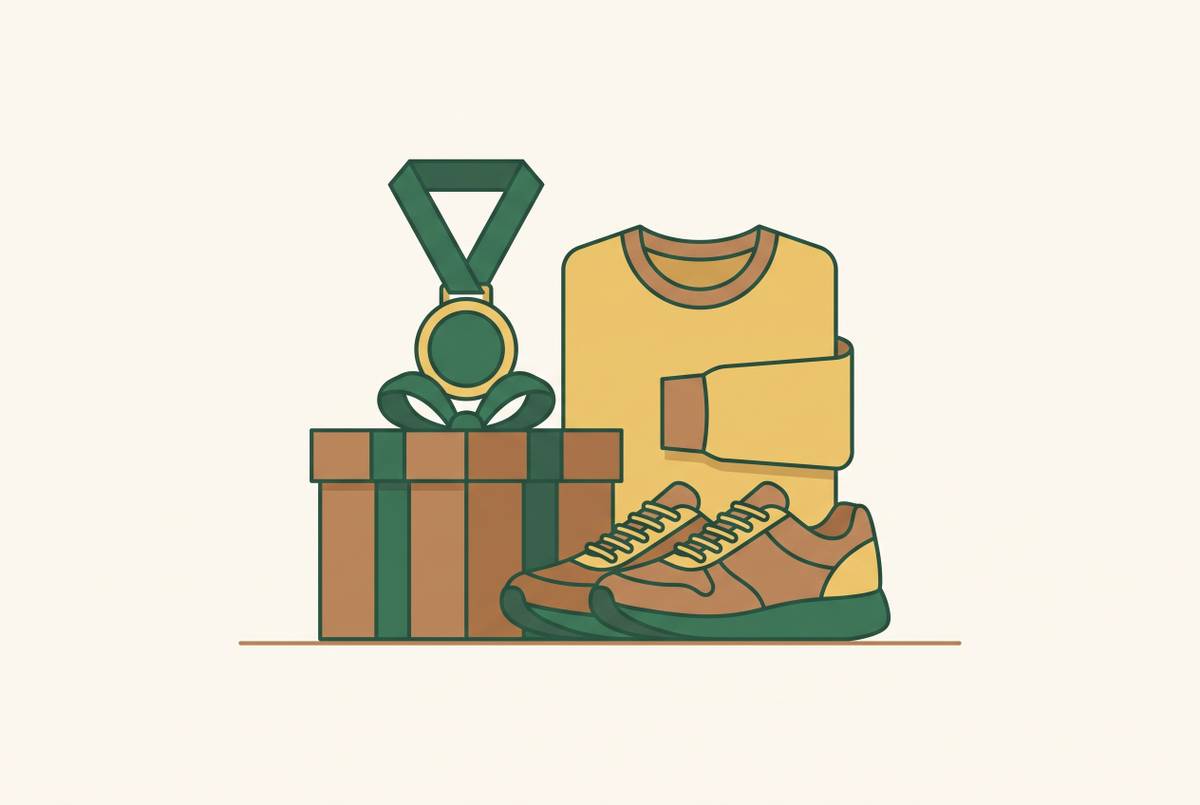
For a partner seeking to honor the whole training arc, the top recommendation is a made-to-order keepsake that includes both race and training data. A course-focused gift is more exact when the city or route is the central memory, while a training-focused object better recognizes the months of preparation. The useful comparison is therefore not simply between materials or prices. It is between what each format can record, how deliberately it is made, and where it belongs in the runner’s life.
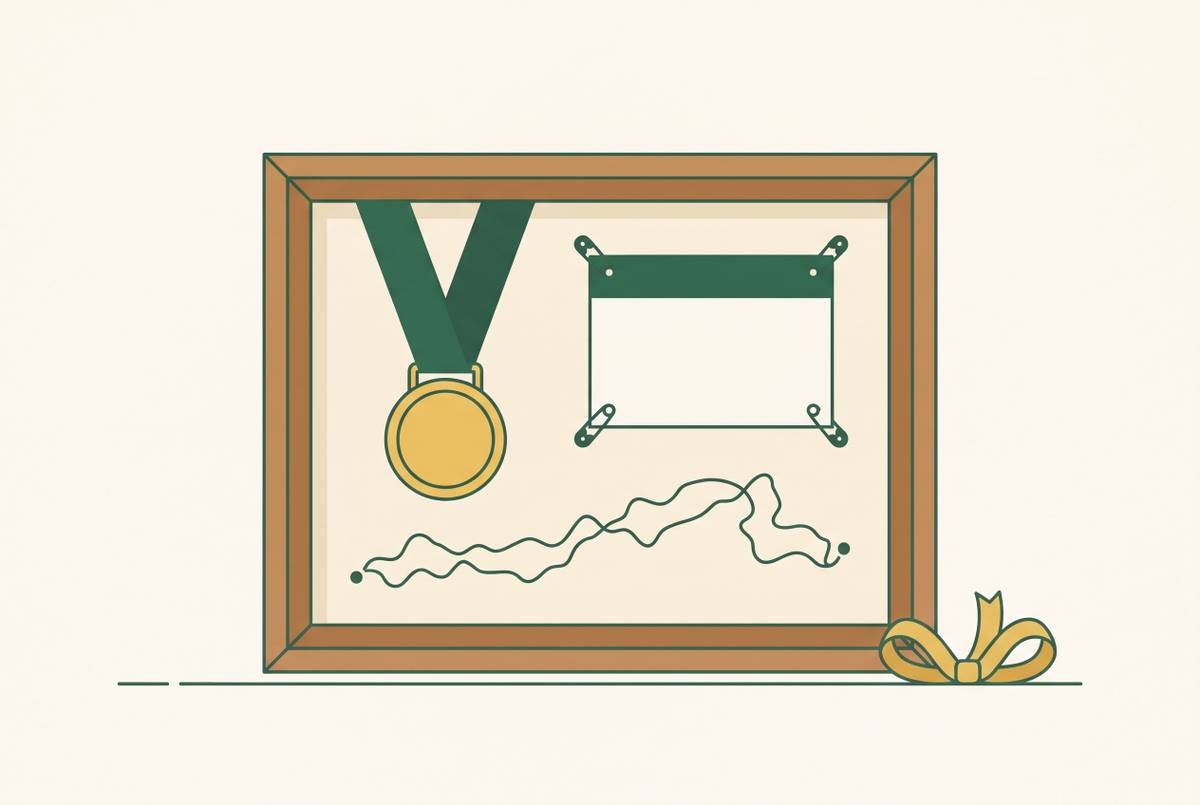
GPS route maps turn Strava, Garmin, or GPX data into wall art. They preserve the course as personal geography, making the shape of the race the main subject. Etsy sells personalized marathon posters, running bucket list maps, and 3D wooden route maps, including one of the Chicago course. These formats suit a story anchored in place. Their limitation is that the route records only where the runner went on race day, leaving the demands of training unrecorded.
Mark Your Moment offers a framed 50×70cm custom route print at $134.00 and accepts GPX uploads from Strava, Garmin, or any fitness tracker. The framing and size give it a defined place as wall art. Its strength remains the course itself. A partner choosing it is giving permanence to race-day geography.
Custom embroidery offers a different kind of permanence through deliberate making. An embroidered object cannot be downloaded, and the work gives the personalization a physical form beyond a printed record. Etsy lists a custom marathoner sweatshirt with name, race, and year at $36.00, with over 1,800 reviews. A personalized runner shoe embroidered towel is listed at $11.04–$12.99, with over 6,200 reviews. These examples show that embroidery spans clothing and useful objects, though the details selected still determine how much of the marathon story appears.
Abbode, an embroidery service, makes each piece to order through an expert embroiderer. It ships in approximately two weeks plus transit and offers rush options. That production model makes lead time part of the choice. It also distinguishes a commissioned object from a generic item selected after the race, because the recipient’s specific details are inputs to the making. Craft alone does not encode the training, however, so a name and race year should not be confused with a record of the buildup.
Wearable keepsakes shift the emphasis from display to continued use. Something worn on the next long run brings the completed marathon into the runner’s ongoing life. When the personalization includes the course and training data, such as time, weeks, miles, and runs, it can join race day to preparation. The format therefore suits a partner who wants both parts remembered together.
Embroidery describes how an object is made, while wearable describes how it will be used, and route art describes what it depicts. A wearable can be embroidered, but embroidery does not necessarily tell the whole story. The deciding feature is the content. A carefully chosen route print can be more faithful than an elaborate object whose personalization omits the part of the achievement the giver intends to honor.
How a partner chooses the right keepsake for the story they witnessed
For a partner making this decision, the starting point is the part of the experience that most needs recognition. If that is the course, city, or finish itself, a GPS route map or 3D course print makes the geography permanent. If it is the dark mornings and months of quiet commitment, the object needs to encode the buildup. Price cannot settle that distinction. The right choice is the one whose details match the story.
Identifying what only the partner saw separates a general celebration from an act of witness. A partner who remembers the long runs chiefly through the recovery afterward has a different commemorative purpose from someone honoring a deeply significant route. That purpose should determine which data appear and which format holds them. The choice becomes clearer once the gift has a specific job.
Made-to-order production makes this approach practical because the recipient’s data become part of the object itself. Strava’s widespread use also makes retrieving or sharing GPS data a familiar route into personalization. Where an order includes a proof, the runner can approve the details before production. Accuracy belongs within the commemoration, even when the gift comes from someone else. The partner supplies the perspective. The runner’s own record gives it a precise form.
The final choice need not explain every month or preserve every detail. It needs to honor what might otherwise get lost behind the finish. Keeping the course on display or giving the training weeks a form the runner can see can do that work without another broad statement of what they achieved. The partner is well placed to choose because the evidence was part of their shared life. The gift gives that evidence a place in the runner’s life after the race.